Stuck Drain? How to Pop Off Your Trailer's Shower Cover
How to Remove a Shower Drain Cover in a Mobile Home
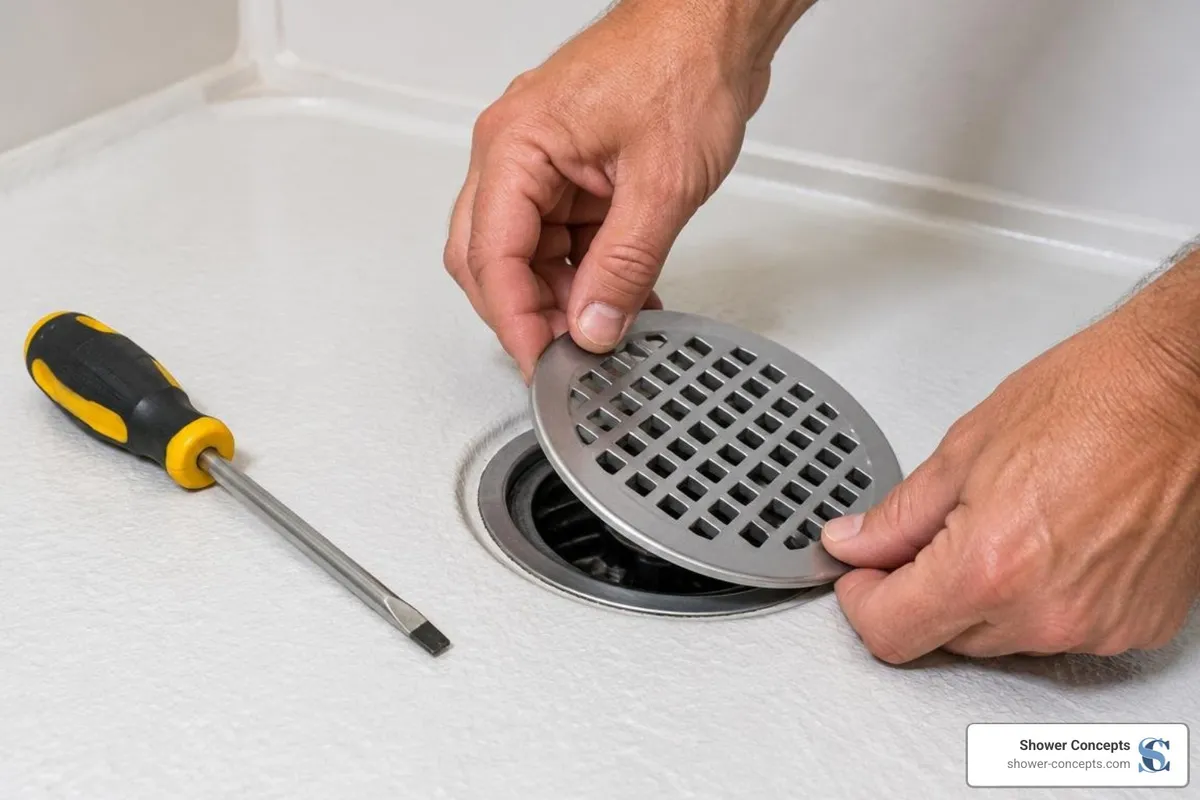
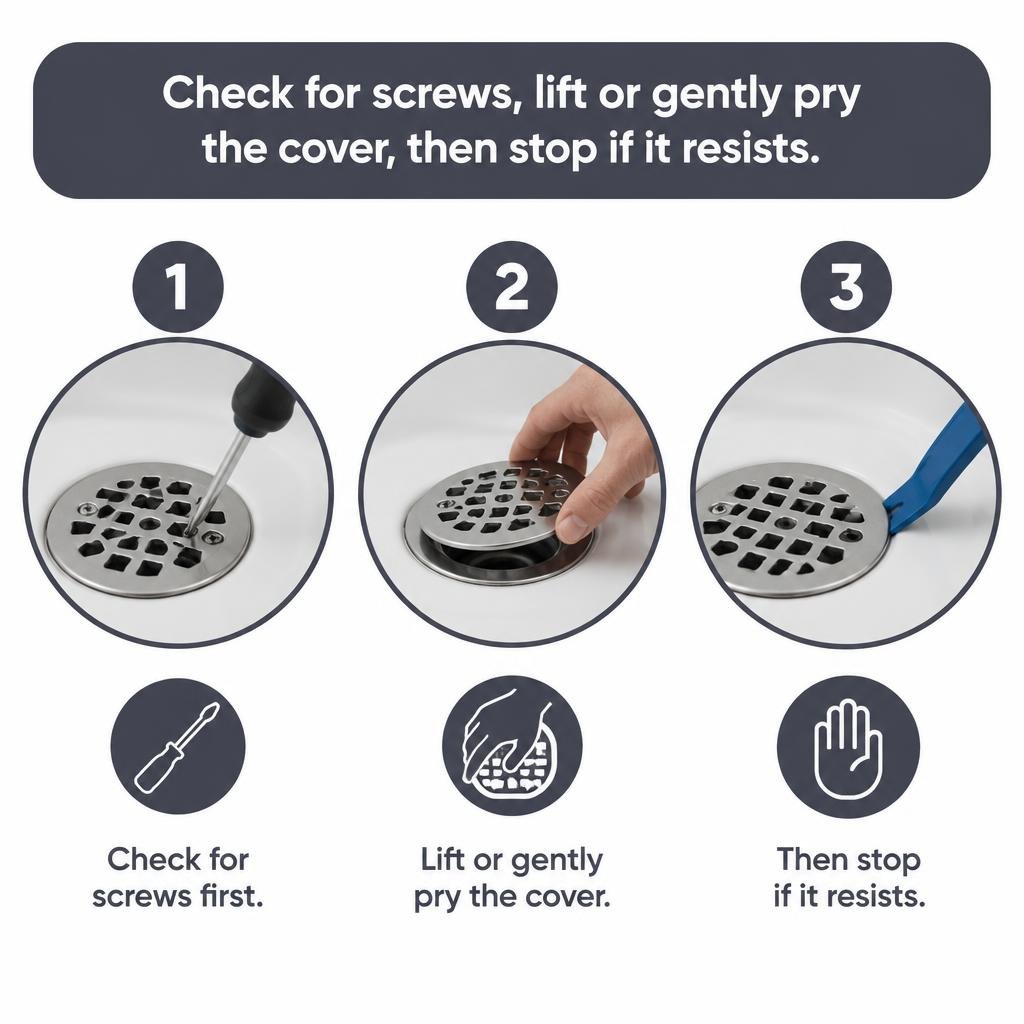
Check for screws first. If you see them, remove them with a matching screwdriver and lift the cover. If there are no screws, the cover may snap in: grip its openings and pull gently, or work a plastic pry tool around the edge. Keep tools off the shower pan. If the cover will not budge, stop rather than forcing it.
I'm David Stewart, an owner at Shower Concepts with over 15 years of experience in tile installation and building systems. That background shapes this guide to how to remove shower drain cover in mobile home showers without damaging the pan.
Types of Mobile Home Shower Drain Covers and Required Tools
Mobile home and manufactured housing plumbing systems differ notably from traditional site-built homes. The shower pans installed in trailers and manufactured units are often molded from lightweight acrylic, fiberglass, or ABS plastic resting on subfloor framing. Consequently, knowing how to remove a shower drain cover in a mobile home starts with identifying the specific fastening mechanism holding the grate in place.
Here are the primary drain cover styles you will encounter in manufactured housing:
Screw-Mounted Covers: These metal or heavy plastic strainers sit flush in the drain flange and are held down by one or two small screws.
Snap-In / Friction-Fit Grates: Featuring small spring-tension metal prongs or plastic tabs around the underside rim, these snap directly into the inner rim of the drain barrel without external fasteners.
Lift-and-Turn Stopper Assemblies: Common in combination garden tubs or shower-tub combos, these feature an internal threaded spindle or a concealed set screw located beneath the stopper cap.
Drop-In Strainer Cups: Perforated baskets or flat disks that drop freely into a recessed drain lip, held down solely by gravity and water flow.
Drain Cover Type | Fastening Mechanism | Common Materials | Primary Removal Method |
|---|---|---|---|
Screw-Mounted | 1–2 Phillips/flathead machine screws | Stainless steel, stamped brass, plastic | Unscrew counter-clockwise after clearing debris |
Snap-In / Friction-Fit | Underside tension clips or perimeter ridge | Stainless steel, chrome-plated plastic | Pry gently at perimeter notches with a flat tool |
Lift-and-Turn | Concealed set screw or center threaded pin | Brass, chrome-plated zinc | Loosen side set screw and turn counter-clockwise |
Drop-In Basket | Gravity / recessed collar | Plastic, stamped stainless steel | Lift upward by center knob or using a wire hook |
Essential Tools for Mobile Home Plumbing Upgrades
Because mobile home pans flex more easily than thick concrete or mortar bed installations, using the right non-marring tools is necessary to avoid cracking the pan or stripping delicate plastic threads below the floor.
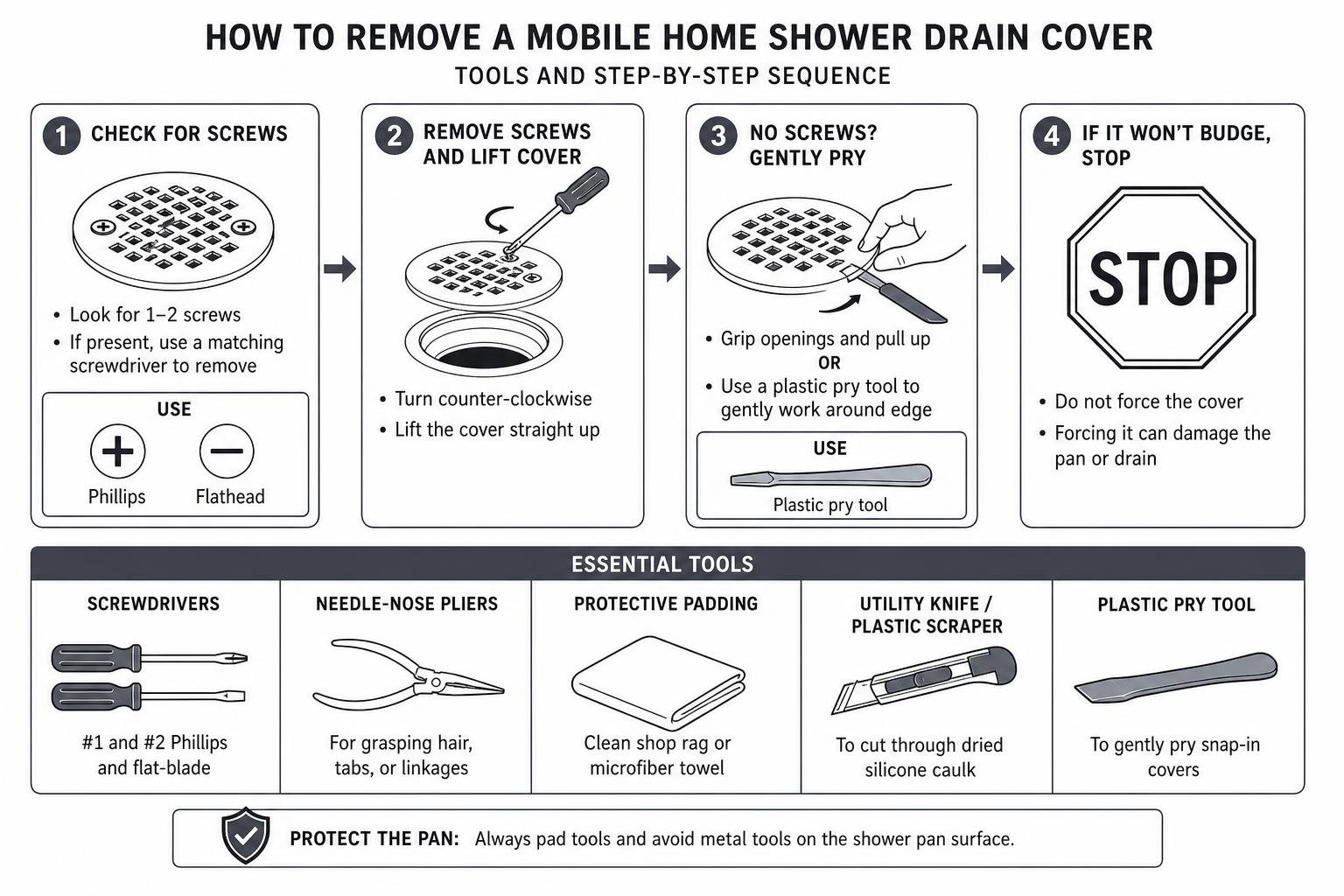
Before beginning, assemble this mobile maintenance kit:
Screwdrivers: #1 and #2 Phillips head, plus a thin, flat-blade screwdriver.
Needle-Nose Pliers: For grasping hair, tabs, or mechanical linkages.
Protective Padding: A clean shop rag or microfiber towel to pad your tools against the shower pan surface.
Utility Knife / Plastic Scraper: To slice through dried silicone caulk around the perimeter.
Penetrating Lubricant / Acetic Cleaner: Standard WD-40, PB Blaster, or white vinegar to dissolve mineral crusts.
Wire Coat Hanger or Drain Snake: For clearing trapped debris.
If you are updating your bathroom during a remodel, you might consider how upgrading to a modern shower drain for tiled floor creates a more durable, elegant drain assembly compared to standard plastic factory pans.
How to Remove Shower Drain Cover in Mobile Home by Attachment Type
A standard drain cover removal routine typically takes between 10 to 30 minutes. Taking time to inspect the edge of the drain assembly protects the underlying subfloor and avoids cracked pans.
For additional reference on universal drain assemblies, see this step-by-step drain removal guide.
Step-by-Step: How to Remove Shower Drain Cover in Mobile Home With Screws

Block the Drain Opening: Lay a thin cloth or paper towel over the center of the grate before loosening anything. This prevents fasteners from slipping down the drain pipe into the P-trap.
Seat the Screwdriver Firmly: Inspect the screw heads for soap scum or hard-water mineral crust. Scrape out the screw slots with the tip of a utility knife so your screwdriver bites cleanly.
Apply Downward Pressure and Turn: Apply firm downward pressure while rotating counter-clockwise. Manufactured homes often use fine-thread screws that strip if the bit slips.
Inspect and Replace Worn Fasteners: If the screws show pitting or rust, replace them with marine-grade 304 or 316 stainless steel screws to prevent corrosion.
Step-by-Step: How to Remove Shower Drain Cover in Mobile Home Without Screws
Snap-in and friction-fit strainers are held by retention prongs that grip the inner throat of the pipe.
Locate the Removal Notch: Most snap-in covers feature a small slot or slight indent along the outer edge.
Protect the Pan Rim: Place a folded washcloth or soft plastic shim directly against the shower pan next to the rim to act as a pivot guard.
Lever the Edge Upward: Insert the tip of a flathead screwdriver or stiff putty knife into the notch, resting against the cloth guard. Gently lever upward.
Use a Wire Hook for Center-Pull Extraction: If the cover lacks an edge notch, bend the tip of an old wire coat hanger into a small 90-degree hook. Slip the hook through the outer holes of the grate, grasp the wire with pliers, and pull upward with steady vertical force.
If you prefer a seamless look that hides the drain grate entirely, explore how a hidden shower drain can enhance your bathroom layout.
Troubleshooting Stuck, Calcified, or Glued Drain Strainers
Mineral buildup, hard water, and dried silicone can bond a drain cover tightly to the pan. In manufactured homes, galvanic corrosion between stainless steel strainers and aluminum drain bodies can also seize components together.
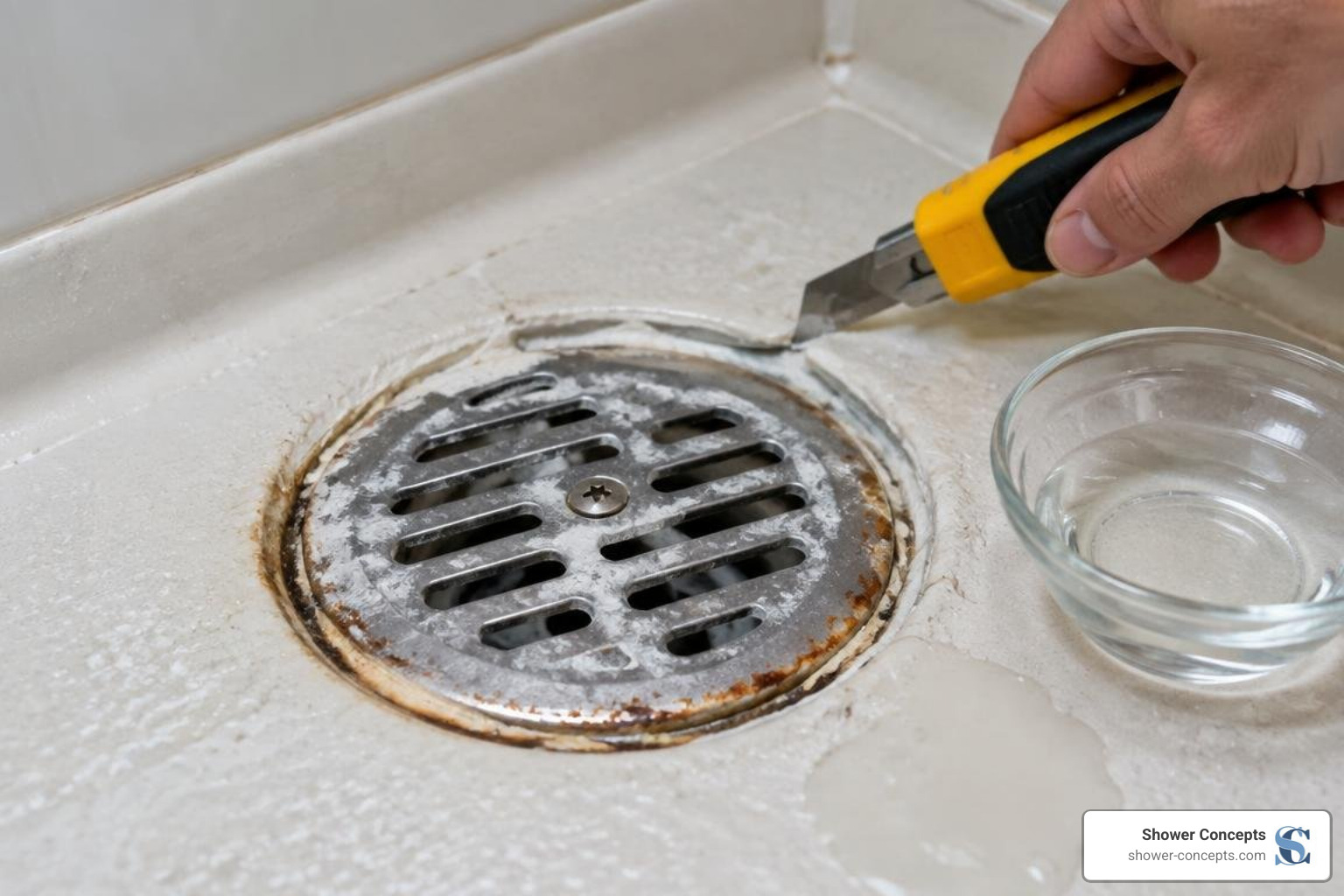
If your drain cover will not budge, work through these troubleshooting steps:
Dissolve Mineral Scale: Pour distilled white vinegar or a calcium-dissolving cleaner directly around the circumference. Let it soak for 30 to 60 minutes to break down hard-water scale.
Apply Penetrating Lubricant: For metal-on-metal seized screws, apply a drop of penetrating oil. For heavy white calcification, a 90-minute wait allows the lubricant to creep down into the threads.
Cut Factory Silicone: Mobile home manufacturers often seal strainers with silicone adhesive. Slice around the outside edge of the grate using a sharp utility knife or razor blade held flat against the metal ring, avoiding scratches to the tub.
Tap to Break the Bond: Place a small wood block across the grate and tap it lightly with a rubber mallet. The slight vibration will help fracture brittle mineral deposits without cracking the plastic drain body.
For real-world community discussions on tackling stubborn strainers in manufactured units, check out this RV community advice on removing shower drain cover.
The 15-Minute Rule: When to Call a Professional Plumber
While unsticking a drain cover is a manageable DIY job, mobile home subfloors made of particle board or oriented strand board (OSB) are vulnerable to water damage if excessive force breaks the pipe seal underneath.
The 15-Minute Rule: If a drain cover resists standard prying, lubricating, and descaling techniques for more than 15 minutes of direct effort, stop. Forcing the component risks spinning the entire drain body underneath the pan, breaking the factory water seal, or cracking the pan flange.
Call a licensed plumber if you observe:
The entire drain assembly rotating inside the pan floor when you turn a screw.
Cracks spreading outward from the drain opening in the fiberglass or acrylic pan.
Water pooling under the mobile home's belly board after working on the drain.
Clearing Debris and Reinstalling the Drain Assembly
Once the cover is off, clean the line to restore optimal flow and prevent recurring backups.
Extract Trapped Hair and Soap Scum: Insert a barbed plastic drain snake into the pipe, twist gently, and draw out hair clogs. Avoid metal snakes that can scratch thin-walled plastic P-traps.
Clear the Trap Line: Pour 1 cup of baking soda down the drain followed by 1 cup of warm white vinegar. Let the mixture fizz for 15 minutes to break down residual grease.
Flush with Warm Tap Water: Rinse the drain thoroughly using warm tap water.
Reinstall the Cover: Clean the rim seating area. If reinstalling a snap-in cover, press the prongs inward slightly and push the grate down until it snaps flush. For screw-mounted covers, tighten the screws by hand until snug.
For additional advice on maintaining trap assemblies, review these RV forum tips on clogged shower drain maintenance.
Frequently Asked Questions About Mobile Home Shower Drains
Can I pour boiling water down a mobile home shower drain to loosen the cover?
No. Standard mobile home DWV (drain-waste-vent) lines frequently utilize standard PVC or ABS piping. Standard PVC pipe is rated to 140°F (60°C); pouring boiling water (212°F / 100°C) down the line can soften plastic joints, compromise glued solvent welds, and reduce pipe pressure capacity down to 20% of its normal rating. Use warm tap water instead.
Should I use plumber's putty or silicone when reinstalling a plastic shower drain?
Always use 100% silicone sealant on plastic, fiberglass, or acrylic mobile home shower fixtures. Traditional plumber's putty contains oils that can degrade certain plastics, cause stress-cracking in acrylic pans over time, and dry out quickly under vibration.
Why is my mobile home shower drain cover stuck without visible screws?
If your cover lacks screws, it is held by either friction-fit spring clips beneath the grate or a bead of factory-applied silicone adhesive around the rim. Mineral calcification from hard water can also cement the cover in place. Slice any visible sealant and pry up carefully using a padded flat tool.
Conclusion
Removing a shower drain cover in a mobile home is a simple DIY task when done with the proper tools and care. By identifying your cover style, protecting the surrounding shower pan, and breaking down mineral deposits before applying force, you can clear blockages quickly without causing leaks in your subfloor.
If you are planning a full bathroom remodel and want a professional, durable shower base tailored to your exact floor plan, explore our custom foam shower pan solutions and point drain options, including our complete Rapid Recess Point Drain Kit. Built from durable, 100% virgin high-density foam, our products make modern shower upgrades straightforward for installers and homeowners alike.
